The Most Radical Thing a Place Can Be Is Real
The most enduring places share a quality that may be difficult to name but is immediately felt: they are unmistakably themselves. Their identity is not applied like a coat of paint — it runs through the architecture, the public spaces, the very logic of how a community is composed. You arrive, and you know, instinctively, that this place has a story.
That quality — call it authenticity, call it character, call it a sense of place — is rarer than it should be. And it matters more than ever.
A World Running Out of Real
We are living through a profound crisis of authenticity. Artificial intelligence generates images of places that do not exist, social media filters the ones that do, and the algorithm serves us a version of the world so precisely tailored that we can go days without encountering anything genuinely local or genuinely true. AI can produce images of communities that exist nowhere but feel like everywhere. The curated and the manufactured have become so fluent that we are losing our ability to tell them apart from the real.
And into this environment, people want to come home and belong.
Home — whether a flat in a mixed-use development, an apartment in an affordable housing scheme, or a residence in a multi-family community — is where the performance stops. It is where people need to feel that the ground beneath them is solid, that the place they inhabit has meaning, that they belong somewhere specific rather than anywhere in general. In a world saturated with the synthetic, the authentic has become not just desirable but necessary.
This is the territory where branding — real branding, place-led branding — has never mattered more.
Place Branding as Discovery, Not Invention
There is a version of place branding that makes the problem worse. A name plucked from thin air. A logo that could belong to a gym or a tech startup. Values so generic they say nothing about this land, this community, this moment. This kind of branding does not ground a place. It untethers it further.
The branding we believe in works in the opposite direction. It begins not with a brief but with a question: what is already true about this place? Every site has a history. Every piece of land carries the memory of what came before — community, industry, agriculture, landscape. And beyond the land itself, the communities that surround these places — their histories, their pride, their aspirations — are just as important a source of truth. The work is to elevate that character, give it a voice, and carry it through every experience a resident or visitor has of the place.
Done well, branding does not impose an identity. It reveals the one that was always there.
Places That Know Who They Are
The developments that endure — that generate genuine affection, loyalty, and community — are the ones that committed to a place-rooted identity and carried it through consistently.
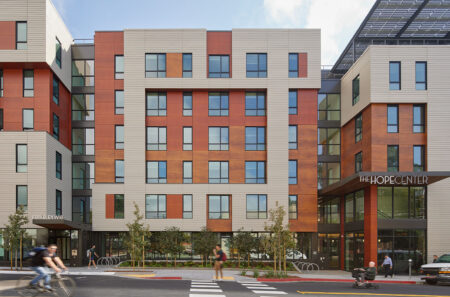
Sunnydale, in San Francisco, is one of the most compelling examples we know. Conceived during the Great Depression and built during World War II, it is the city’s largest public housing community — a place with deep roots, multigenerational residents, and a story that deserves to be told, not erased. When the HOPE SF initiative set about transforming Sunnydale into a mixed-income neighbourhood of 1,700 homes, the founding commitment was to the existing community: an anti-displacement mission that kept residents in place while rebuilding around them. Argus developed the master brand plan, visual palette, and naming framework for the project — work that began not with a mood board but with the community itself. The history of the place, the pride of its residents, and the aspiration of what it could become all shaped an identity that felt genuinely earned.
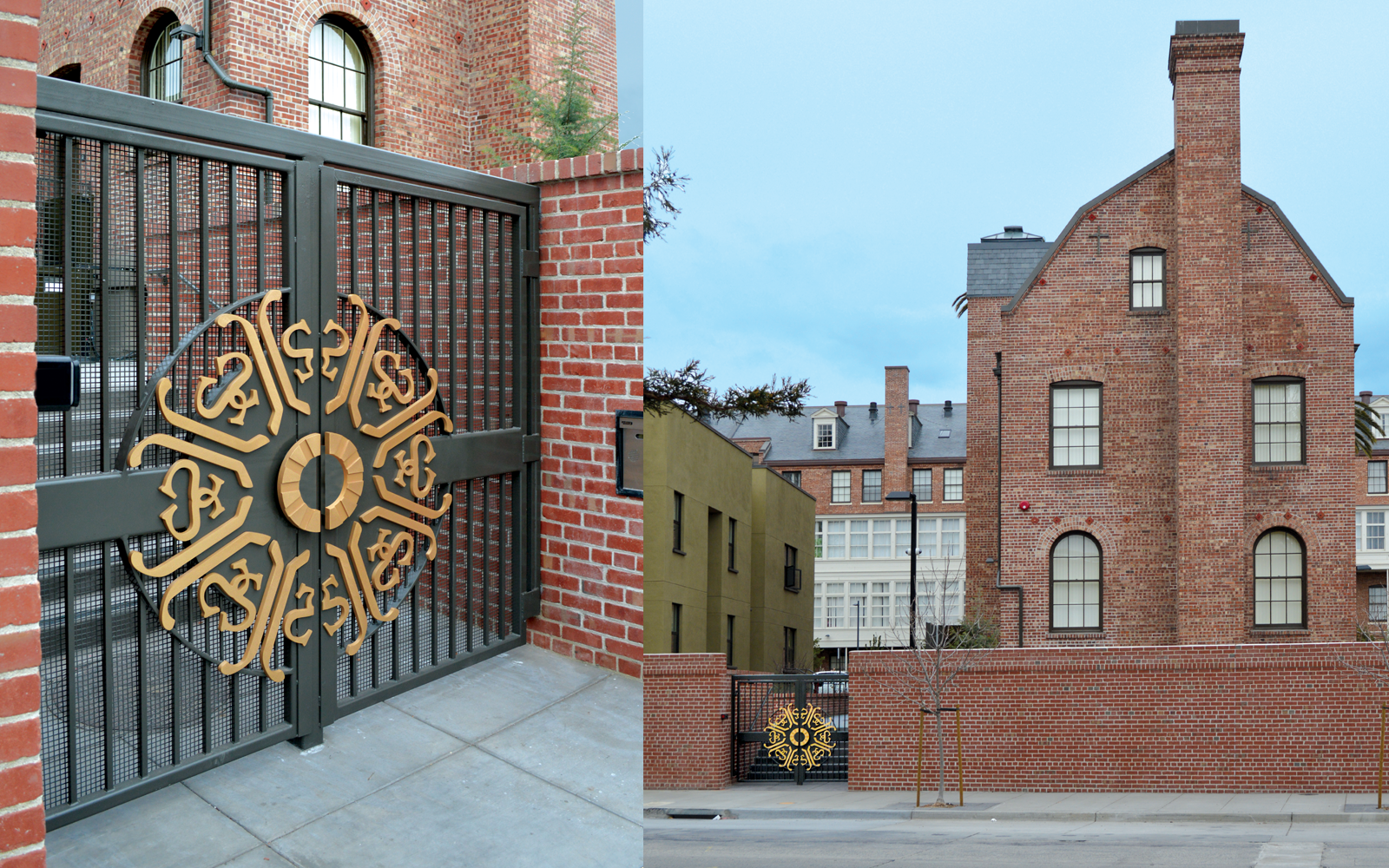
We have seen this work just as powerfully at the building scale. St. Joseph’s, a mixed senior and family development in Oakland’s Fruitvale District, sat on a site layered with history — a historic senior building, a modern family apartment building, and a campus that had served the community for generations. Rather than smooth over those differences with a single generic identity, we went into the archives. We interviewed stakeholders and historians. We studied the surrounding neighbourhood. What emerged were distinct but connected identities for each component of the campus — expressed through signage, wayfinding, and an art gallery that told the story of the site’s evolution and celebrated the Fruitvale community. The place’s history became the brand. And the brand gave residents something to feel genuinely proud of.
These are not luxury problems. The same principles — listening to a place, honouring its past, carrying its story consistently through every touchpoint — apply at every level of the market. That sense of belonging somewhere that means something is not a premium feature. It is what every resident deserves.
Wayfinding as the Grammar of Place
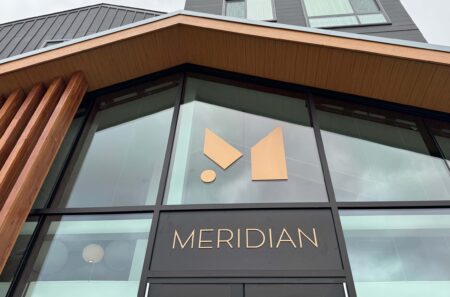
If branding is the voice of a place, wayfinding is its grammar. The sequence of arrival. The sign that greets you. The street name that carries a piece of local history. The materials that echo the surrounding landscape. The environmental graphics that make memory visible. The best wayfinding layers story into the everyday — making the identity of a place legible at every scale, from the development entrance to the door of a single apartment.
In an age when so much of our environment is frictionless and interchangeable, that care is felt. Its absence is felt even more.
The Ground Beneath Our Feet
When the world feels fragmented — when the news is destabilising, when social media distorts, when AI makes it harder to know what is real — people reach instinctively for something that holds. A place with a clear identity, a legible story, and a consistent character offers exactly that. It says: this is here, this is real, this is not going anywhere. For residents, that is not just good design. It is stability. It is the quiet confidence of knowing that the place you come home to knows what it is.
That kind of grounding cannot be generated. It has to be built — carefully, honestly, from the truth of a place. Which is why the work of authentic branding has never felt more urgent, or more human.
Our Conviction
At Argus, we believe branding has the power to transform a development into a place — to take what is latent in a site’s history, landscape, and community and make it felt, legible, and lasting.
In the age of AI, infinite scroll, generated imagery, and places that look like everywhere and mean nothing, the most radical thing a development can do is be genuinely, specifically, unmistakably itself.
Argus works with developers, architects, and housing providers to bring that identity to life through naming, visual identity, wayfinding, and environmental graphics rooted in the character of a place and the people who call it home.

Join Us!
Join our mailing list to receive strategies, practical advice, news and helpful resources delivered right to your inbox.
You have Successfully Subscribed!

Related Posts